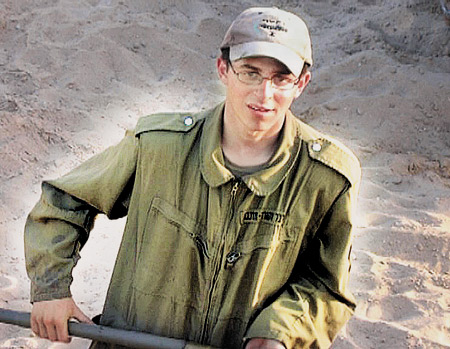
Showing posts with label Gilad Shalit. Show all posts

Thursday, May 26, 2011

Netanyahu Misled US Congress about European Observers at Rafah Crossing


If Israel wants a say in passage via Rafah, it should permit passage between Gaza and the West Bank, writes Gisha director, Sarah Bashi, in today's guest post about Gaza's southern border being opened by Egypt through post-Mubarak legislation. Gisha is an Israeli NGO, an acronym which stands for Center for Freedom of Movement.

Gisha welcomes the announcement that Egypt will expand the ability of Gaza residents to travel abroad via Rafah Crossing, which has become Gaza's gateway to the world, in light of Israel's closure of Gaza's airspace and territorial waters and restrictions on travel via Erez Crossing. Gisha notes the need also to permit passage of people and goods between Gaza and the West Bank, recognized by Israel as a single territorial unit whose integrity is the basis for a two-state solution.

Since the capture of an Israeli soldier in June 2006, Israel has vetoed the implementation of the U.S.-brokered 2005 Agreement on Movement and Access which gave Israel security supervision over Rafah Crossing in exchange for a commitment to permit access between Gaza and the West Bank. If Israel wants a say concerning passage via Rafah, it should implement its commitment to allow Palestinians to travel between Gaza and the West Bank.

The Egyptian commitment concerning Rafah includes longer operating hours, no numerical limit on passengers, and visa-free travel, except for men aged 18-40. Crossing for Palestinians is expected to continue to be limited to those listed in the Israeli-controlled population registry. The expansion does not appear to include passage of goods, which are restricted to the Israeli-controlled crossings and subject to prohibitions on construction materials and export.

Background – Netanyahu Mislead Congress.

Since Israel closed Gaza's airspace and territorial waters and all but closed Erez Crossing to Palestinians, Rafah Crossing has become the gateway to the outside world for 1.5 million Palestinian residents of Gaza. Crossing via Erez (on the border between Gaza and Israel) is limited to "extraordinary humanitarian cases, especially urgent medical cases", preventing Palestinians from traveling between Gaza and the West Bank.

Rafah Crossing was operated according to the U.S.-brokered Agreement on Movement and Access until June 2006, when Israel announced its suspension following the capture of the Israeli soldier Gilad Shalit. Prime Minister Benjamin Netanyahu's comment before the U.S. Congress that in Rafah, "the European observers evaporated overnight" failed to note that the "evaporation" was ordered by Israel, which refused to allow the EU border mission observers to reach their post and has objected to the implementation of the agreement ever since. The EU observers have been waiting in their hotel in Ashkelon for the last five years, waiting for Israeli permission to return to Rafah.

Rafah remained mostly closed from June 2006 to June 2010, when Egypt opened it in the wake of the flotilla incident for limited categories including holders of foreign passports or visas and those seeking medical attention in Egypt. Between June 2010 and January 2011, 19,000 people per month on average crossed Rafah in both directions, 47% of the number of people who crossed monthly in the first half of 2006. Crossing for Palestinians is limited to those listed in the Israeli-controlled population registry.
(Many files were destroyed in aerial assaults during Operation Cast Lead.)Since the 2005 "disengagement", goods have not been permitted to pass via Rafah, except for humanitarian assistance which Egypt occasionally permits through Rafah.

Friday, January 23, 2009

Obama urges Israel to open Gaza borders


The new American president, Barack Obama, has urged Israel to open its borders with Gaza, but no one expects this to happen unless a prisoner exchange goes forward. Reports that Corporal Gilad Shalit, now in his third year in Hamas's clutches, was wounded in an air strike during the early days of Operation Cast Lead have not been confirmed. His whereabouts and his health are of vital concern to Israel. Still, Obama's words are a sign that Washington is weighing the political and security costs of the Israeli-Arab conflict and maybe rethinking unconditional support of Israel. Obama is pushing the Two-State solution, it appears, but said absolutely nothing about dismantling settlements. Nevertheless, it's a big step on Day Two in the Oval Office.
Dubya, his predecessor, first publicly called for a Palestinian state in October 2001, but waited years before taking concrete action, which came to precious little. (Remember Annapolis? The Road Map? Birth Pangs ??) Well, let's watch as Barack and Hillary now replace those dancing partners George and Condi for a Waltz with Barak, the defence minister. Obama has a three-stage plan to resolve the stand-off in Palestine and Israel. It sounds so simple: top priority is for an end to the fighting, then he wants to unite the sundry Palestinian factions and finally to restart the peace process.

According to the Financial Times, this was

a speech that signalled the new US administration’s shift from Bush-era policy on the Middle East and the world as a whole. In a high-profile address on his second day in office, just hours after he signed an executive order to close the centre at Guantánamo Bay, Mr Obama proclaimed that the US would “actively and aggressively seek a lasting peace between Israel and the Palestinians” in the wake of this month’s Gaza war.

“The outline for a durable ceasefire is clear: Hamas must end its rocket fire: Israel will complete the withdrawal of its forces from Gaza: the US and our partners will support a credible anti-smuggling and interdiction regime, so that Hamas cannot re-arm,” the US president said.

“As part of a lasting ceasefire, Gaza’s border crossings should be open to allow the flow of aid and commerce, with an appropriate monitoring regime, with the international and Palestinian Authority participating.”

Mr Obama and Hillary Clinton, secretary of state, also announced the appointment of George Mitchell, as the US special envoy for the Arab-Israeli conflict and Richard Holbrooke, former US ambassador to the United Nations, as representative for Afghanistan-Pakistan.

The moves signalled another shift from the foreign policy of the Bush administration, which had resisted appointing a high-profile envoy for Middle East peace. [Relying on the dubious diplomatic charm offensive of Tony Blair, instead.]

Although Condoleezza Rice, who finished her tenure as secretary of state this week, brokered a 2005 deal to allow open border crossings to Gaza, access was often shut down, with Israel citing security concerns and Hamas launching rocket attacks. The issue is set to test the authority of the new administration as it begins to grapple with the Middle East conflict.

Before Mr Obama gave his speech, an Israeli official said there would be tough conditions for any lifting of the blockade, which he linked with the release of Gilad Shalit, a soldier held captive by Hamas since 2006.

“If the opening of the passages strengthens Hamas we will not do it,” the official said.

“We will make sure that all the [humanitarian] needs of the population will be met. But we will not be able to deal with Hamas on the other side. We will not do things that give legitimacy to Hamas.”

Under its ceasefire, Hamas has given Israel until Sunday to open the borders. Much of Gaza’s civilian infrastructure has been destroyed during the three-week Israeli offensive and, without building materials and other supplies, there is little hope of rebuilding the water, sewage and power networks as well as private homes and key government buildings. But many foreign donors share Israel’s concerns that the reconstruction efforts should not be led by Hamas, or enhance the group’s legitimacy.

“Let me be clear: America is committed to Israel’s security and we will always support Israel’s right to defend itself against legitimate threats,” Mr Obama said.

But in comments referring to the Gaza conflict he added: “I was deeply concerned by the loss of Palestinian and Israeli life in recent days and by the substantial suffering and humanitarian needs in Gaza. Our hearts go out to Palestinian civilians who are in need of immediate food, clean water, and basic medical care, and who’ve faced suffocating poverty for far too long.”

He called on Arab governments to “act on” the promise of a Saudi-led 2002 Arab peace initiative by supporting the Palestinian Authority headed by President Mahmoud Abbas “taking steps towards normalising relations with Israel, and by standing up to extremism that threatens us all.”

The US has pledged an extra foreign aid package- around $1.75m to help rebuild Gaza- but it will go through the Palestinian Authority rather than give legitimacy to Hamas. As a bulwark against the vicious Middle East 'hood, billions of military aid will continue to be alloted to Israel and is expected to stay at the same lavish level.

Wednesday, January 21, 2009

Cairo says Israel, Egypt have no information on Gilad Shalit after 3 week conflict in Gaza


Neither Egypt nor Israel knows whether an Israeli soldier held by Hamas militants in the Gaza Strip for two and a half years is alive, Egypt Foreign Minister Ahmed Abul Gheit said on Wednesday.

Egypt had tried to broker a deal between Israel and Hamas to release Gilad Shalit in exchange for hundreds of Palestinian prisoners before Israel began its three-week "Cast Lead" offensive in Gaza on December 27.


According to the Agence France Presse, Mussa Abu Marzuk, deputy head of Hamas politburo, told an Arabic newspaper after the war began that Shalit might have been wounded in Israeli air strikes and that the "subject no longer interests" Hamas.

"Whether Shalit is alive or not alive, this is a question that needs investigation now," Abul Gheit said.

"I have no information and I believe the Israeli side has no information, either," he said.

Israel has said it will not end its blockade of Gaza -- a key Hamas demand and the reason it cites for launching rockets into southern Israel -- unless there is progress on releasing Shalit.

Abul Gheit said the release of Shalit had been an Israeli objective when it agreed to a six-month long truce brokered in June 2008 by Egypt between the Jewish state and Hamas.

Hamas had demanded 1,400 Palestinian prisoners in exchange for Shalit. Their list included about 450 prisoners implicated in attacks against Israelis. Israel was reluctant to release prisoners with "blood on their hands."

Israel holds more than 11,000 Palestinian prisoners, the Palestinian Authority says.

Egyptian state-run news agency MENA quoted President Hosni Mubarak as saying in an October interview that Shalit was in good health and Hamas would not harm him.

"Under no circumstances should he be mistreated," he said. "Palestinians are not stupid. They must seriously consider what the consequences would be if they kill him," he said.

Wednesday, May 21, 2008

Region hotting up? Hopes meet reality


In the past few weeks, the noise from the Middle East region has intensified, reaching a crescendo with U.S. President George W. Bush’s visit and Osama Bin Laden's latest Jihadist harangue about targetting Israel. According to Strategic Forecast analyst George Friedman, whose viewpoint is excerpted below, there were four axes of activity:

/click on map, left, to enlarge/

*Talk about a deal between Israel and the Palestinians;

*Talk about a deal between the Syrians and Israelis;

*Fighting in Lebanon between Hezbollah and its enemies; and

*Israeli Prime Minister Ehud Olmert under investigation for taking bribes.
Taken together, it would seem something is likely to happen. Whether it does remains to be seen.

Talk of an Israeli-Palestinian Deal

Let’s begin with the talk of a deal between the Israelis and Palestinians and with the fact that this description is a misnomer. The Palestinians are split geographically between the West Bank and the Gaza Strip and ideologically into two very distinct groups. The West Bank is controlled by the Palestinian National Authority (PNA), which as an institution is split between two factions, Fatah and Hamas. Fatah is stronger in the West Bank than in Gaza and controls the institutions of the PNA. It is almost fair to say that the PNA — the official Palestinian government — is in practice an instrument of Fatah and that therefore Fatah controls the West Bank while Hamas controls Gaza.

Ideologically, Fatah is a secular movement, originating in the left-wing Arabism of the 1960s and 1970s. Hamas is a religiously-driven organization originating from the Sunni religious movements of the late 1980s and 1990s. Apart from being Palestinian and supporting a Palestinian state, it has different and opposed views of what such a state should look like both internally and geographically. Fatah appears prepared to make geographical compromises with Israel to secure a state that follows its ideology. Its flexibility in part comes from its fear that Hamas could supplant it as the dominant force among the Palestinians. For its part, Hamas is not prepared to make a geographical compromise except on a temporary basis. It has made it clear that while it would accept a truce with Israel, it will not accept a permanent peace agreement nor recognize Israel’s right to exist.

Israel also is split on the question of a settlement with the Palestinians, but not as profoundly and institutionally as the Palestinians are divided. It is reasonable to say that the Israeli-Palestinian conflict has become a three-way war between Hamas, Fatah and Israel, with Fatah and Israel increasingly allied against Hamas. But that is what makes the possibility of a settlement between Israel and the Palestinians impossible to imagine. There can be a settlement with the PNA, and therefore with Fatah, but Fatah does not in any way speak for Hamas. Even if Palestinian President Mahmoud Abbas could generate support within Fatah for a comprehensive settlement, it would not constitute a settlement with the Palestinians, but rather only with the dominant faction of the Palestinians in the West Bank.

Given the foregoing, the Israelis have been signaling that they are prepared to move into Gaza in an attempt to crush Hamas’ leadership. Indeed, they have signaled that they expect to do so. We could dismiss this as psychological warfare, but Hamas expects Israel to move into Gaza and, in some ways, hopes Israel does so that it can draw the Israelis into counterinsurgency operations in an inhospitable environment. This would burnish Hamas’ credentials as the real anti-Israeli warriors, undercutting Fatah and the Shiite group Hezbollah in the process.

For Israel, there might be an advantage in reaching a settlement with Abbas and then launching an attack on Gaza. Abbas might himself want to see Israel crush Hamas, but it would put him and the PNA in a difficult position politically if they just stood by and watched. Second, the Israelis are under no illusions that an attack on Gaza would either be easy or even succeed in the mission of crushing Hamas’ military capability. The more rockets fired by Hamas against Israel, the more pressure there is in Israel for some sort of action. But here we have a case of swirling activity leading to paralysis. Optimistic talk of a settlement is just talk. There will be no settlement without war, and, in our opinion, war will undermine Fatah’s ability to reach a settlement — and a settlement with the PNA would solve little in any event.

(Note that an Egyptian official announced yesterday that Israel is prepared 'in principle' to accept a two-stage Gaza truce that would include lifting the siege in return for the release of corporal Gilad Shalit, held captive by Hamas for nearly two years.

Meanwhile, Israeli air strikes continue in the Gaza Strip. The photo-shopped image at left was supplied by disgruntled ex-soldiers from the IDF who despair of the toll of occupation and desire peace in their lives.)

Talk of a Syrian-Israeli Peace Agreement

There also is the ongoing discussion of a Syrian-Israeli peace agreement. Turkey is brokering these talks, driven by a desire to see a stable Syria along its border and to become a major power broker in the region. The Turks are slowly increasing their power and influence under the expectation that in due course, as the U.S. withdraws from Iraq, a power vacuum will exist that Turkey will have to — and want to — fill. Turkish involvement in Syria represents a first step in exercising diplomatic influence to Turkey’s south.

Syria has an interest in a settlement with Israel. The al Assad government is composed of an ethnic minority — the Alawites, a heterodox offshoot of Shiite Islam. It is a secular government with ideological roots much closer to Fatah than to Hamas (both religious and Sunni) or Hezbollah (Shiite but religious). It presides over a majority Sunni country, and it has brutally suppressed Sunni religiosity before. At a time when the Saudis, who do not like Syria, are flush with cash and moving with confidence, the al Assad regime has increased concerns about Sunni dissatisfaction. Moreover, its interests are not in Israel, but in Lebanon, where the region’s commercial wealth is concentrated.

Syria dabbles in all the muddy waters of the region. It has sent weapons to Sunni jihadists. Hamas’ exiled central leadership is in Damascus. It supports Hezbollah in Lebanon. Syria thus rides multiple and incompatible horses in an endless balancing act designed to preserve the al Assad government. The al Assads have been skillful politicians, but in the end, their efforts have been all tactics and no strategy. The Turks, who do not want to see chaos on their southern border, are urging the Syrians to a strategic decision, or more precisely to the status quo ante 2006.

The United States has never trusted the al Assads, but the situation became particularly venomous after the 2003 invasion of Iraq, when the Syrians, for complex political reasons, decided to allow Sunni fundamentalists to transit through Syria into Iraq. The Syrian motive was to inoculate itself against Sunni fundamentalism — which opposed Damascus — by making itself useful to the Sunni fundamentalists. The United States countered the Syrian move by generating pressure that forced the Syrian army out of Lebanon.

The Israelis and Syrians have had a working understanding on Lebanon ever since the Israeli withdrawal from Lebanon. Under this understanding, the Syrians would be the dominant force in Lebanon, extracting maximum economic advantage while creating a framework for stability. In return, Syria would restrain Hezbollah both from attacks on Israel and from attacks on Syrian allies in Lebanon — which include many groups opposed to Hezbollah.

The Syrian withdrawal was not greeted with joy in Israel. First, the Israelis liked the arrangement, as it secured their frontier with Lebanon. Second, the Israelis did not want anything to happen to the al Assad regime. Anything that would replace the al Assads would, in the Israeli mind, be much worse. Israel, along with the al Assads, did not want regime change in Damascus and did not want chaos in Lebanon, but did want Hezbollah to be controlled by someone other than Israel. And this was a point of tension between Israel and the United States, which was prepared to punish the al Assads for their interference in Iraq — even if the successor Syrian regime would be composed of the Sunni fundamentalists the Syrians had aided.

The Turkish argument is basically that the arrangement between Syria and Lebanon prior to 2006 was in the best interests of Israel and Syria, but that its weakness was that it was informal. Unlike the Israeli-Egyptian or Israeli-Jordanian agreements, which have been stable realities in the region, the Israeli-Syrian relationship was a wink and a nod that could not stand up under U.S. pressure. Turkey has therefore been working to restore the pre-2006 reality, this time formally.

Two entities clearly oppose this settlement. One is the United States. Another is Hezbollah.

The United States sees Syria as a destabilizing factor in the region, regardless of Syria’s history in Lebanon. In addition, as Saudi oil revenues rise and U.S. relations with Sunnis in Iraq improve, the Americans must listen very carefully to the Saudis. The Saudis view Syria — a view forged during the 1970s — as an enemy. The Saudis also consider the Alawite domination of Syrian Sunnis as unacceptable in the long run. Saudi Arabia is also extremely worried about the long-term power of Hezbollah (and Iran) and does not trust the Syrians to control the Shiite group. More precisely, the Saudis believe the Syrians will constrain Hezbollah against Israel, but not necessarily against Saudi and other Sunni interests. The United States is caught between Israeli interest in a formal deal and Saudi hostility. With its own sympathies running against Syria , the U.S. tendency is to want to gently sink the deal.

In this, U.S. interests ironically are aligned with Hezbollah and, to some extent, Iran. Hezbollah grew prosperous under Syrian domination, but it did not increase its political power. The Syrians kept the Shiite group in a box to be opened in the event of war. Hezbollah does not want to go into that box again. It is enjoying its freedom of action to pursue its own interests independent of Syria. It is in Hezbollah’s interests to break the deal. Lacking many allies, the Iranians need the Syrians, as different as the Syrians are ideologically. Iran is walking a tightrope between Syria and Hezbollah on this. But Tehran, too, would like to sink the talks.

Monday, March 31, 2008

Gilad Shalit is alive and well - confirmed


It's not April 1st yet, otherwise Izzy Bee might worry about Israel being played as an April Fool. Khalid Mashaal, the leader of Hamas who's dodging targeted assassinations by lying low in Damascas, told Tim Marshall of Sky News that Gilad Shalit, the young soldier who was grabbed by Hamas back in June 2006, is held in Gaza and very much alive.

"Gilad (Shalit) is alive and we are treating him well but Israel is treating the Palestinian prisoners they hold very badly."...
"We renew our offer to Israel to let the civilians on both sides not be a part of this conflict," he told interviewers. "We renew this offer today."

Mr Meshaal, who is a target for Israeli assassination, said if Israel agreed it would not kill any Palestinian civilians then Hamas would only carry out attacks against Israeli military targets.
This is a repeat of an offer made ten years ago.
His sullen remarks about the Holocaust statistics enraged many inside Israel, and officials in Jerusalem are wondering about his promises and his approaches to the PA.

Wednesday, July 04, 2007

BBC Man Freed in Gaza after 114 Days


Alan Johnston's ordeal ended in the early hours of this morning when he was released unconditionally.

He appeared pale but in reasonable health after 4 months of solitary confinement and was articulate even during a chaotic press conference held at the home of the sacked Palestinian Prime Minister, Ismail Haniya. Colleagues in Jerusalem praised Alan, a 45-year-old Scot, as "superman" for his professional calm. Since March, the BBC had urged Hamas not to resort to a military rescue, and the reporter's release followed Hamas's exchange of prisoners with the Army of Islam faction, Jihadists who dooperate with the criminal Dogmush clan. Late Tuesday, Hamas militia on rooftops surrounding the windowless room where Johnston was held engaged in a firefight which killed a civilian in crossfire. Johnston survived captivity unharmed and finally is headed home.

Israelis anxiously await the release of the other Gaza captive, Corporal Gilad Shalit, siezed by the same renegade Jihadist faction more than a year ago, when they tunneled under the border into Israel. Poignantly, today marks the 31st anniversary since the Entebbe raid, a secret mission when Israeli special forces freed hostages held at Entebbe Airport in Idi Amin's Uganda. One Israeli soldier, 45 Ugandan soldiers, six hijackers, and three hostages were ultimately slain during the rescue action; 100 hostages were let go. Haniya, chuffed from the release of Johnston, told the press that "the ball is in Israel's court" and wants to swap prisoners.

Monday, June 25, 2007

Shalit & Johnston boobytrapped in Gaza


Today marks one year since the young IDF corporal Gilad Shalit was abducted by Hamas gunmen in a cross-border raid. Israeli television reports quoted Hamas sources assurances that their captive is alive and healthy, held incommunicado in an underground chamber in Shaboura, a refugee camp near Gaza's southern border. Hamas sources said Shalit's two-room cell is dug into the bottom of a 15 meter shaft lined with explosives. His jailers access Shalit's hidey-hole by ladder and keep enough provisions there so that they can withstand a two week siege.

Meanwhile, a disturbing video of the BBC's Gaza correspondent Alan Johnston, trussed up in a suicide belt, was released online by his kidnappers today, as the latest deadline for the journalist's release expired. A little-known faction, called Jaish al-Islam [or Army of Islam], defied the Hamas ultimatum by showing this tape, in which Johnston understandably appears anxious.
"The situation now is very serious. As you can see I have been dressed in what is an explosive belt, which the kidnappers say will be detonated if there was any attempt to storm this area," he said.

Johnston is held hostage at a seaside tower block in Gaza City. Clerics said that his kidnappers must be scared of retribution by other factions if they release the BBC reporter. “We condemn the continued release of videos like this which can only add to the distress of Alan Johnston’s family and friends,” said a British Foreign Office spokeswoman. The BBC appealed again for Johnston's immediate release and posted this second video on its website. His abductors insist on swapping the Scotsman Johnston for Abu Qatada, a Palestinian-born Islamic cleric who is accused of links with al-Qaeda and currently is detained by Britain as a national security threat. Abu Qatada is expected to be deported soon.

This just in: Hamas has released an audio tape purported to be Shalit, and his father confirmed that the voice sounded like his son's. On the recording, the captive soldier says his health is deteriorating and berates the Israeli government for ignoring his plight and for not meeting the demands of Izz el-Din al-Qassam, the armed wing of Hamas. B'Tselem, an Israeli NGO, has demanded that Hamas allow the International Red Cross to visit the hostage, Shalit, and pointed out that his captivity flouts the Geneva conventions. Last year, when Shalit's parents attempted to send their son some new eyeglasses, Hamas balked, fearing an attempt to smuggle in spy specs replete with miniature gadgetry.
Prime Minister Ehud Olmert, in a surprise announcement at the Middle East summit, announced the release of 250 Palestinian prisoners, as per demands of Shalit's kidnappers. Just to spite Hamas, all of them are Fatah loyalists.

Friday, June 01, 2007

Flicker of hope for BBC's Johnston?

This morning, a videotape of Alan Johnston, the BBC's missing-in-action Gaza correspondent, was posted on an Arab website, al-Ekhlaas. Click here to view it. He said he'd been well fed, treated without violence and then called for the lifting of sanctions against the Palestinian Authority. This tape is the first proof of life, post-kidnap, but there's no indication when it was recorded or whether Johnston, who has been held hostage since March 12th, still is ok. The BBC is cautiously optimistic and continues to work towards his freedom. The Army of Islam (Jaish al-Islam) posted the footage on the internet, according to wire services. They were the same group that released images of Johnston's identity card earlier this month, shortly after a renegade group claimed the captive was dead.

Earlier, heated words on the risks of reporting in the Middle East and pandering to terrorists were exchanged between Bret Stephens, a Wall Street Journal commentator and former editor of the Jerusalem Post, and Fran Unsworth of the BBC. Hat tip to Tom Gross, media analyst, for highlighting this rift. Stephens' column, which suggested that Johnston tilts toward the pro-Fatah camp and that his employers placed him in jeopardy because they felt the BBC had "political impunity" and special access inside the Gaza strip, raised hackles. It was branded as "scurrilous" and "snide". When Unsworth criticised a lack of sympathy and drew a comparison with the plight of Daniel Pearl, the Wall Street Journal reporter beheaded in Karachi by Al Qaeda sword-bearers, this was interpreted as a "cheap shot". On all sides, players are getting testy as the days of captivity drag by and the internecine conflict festers (inside Palestine as well as amongst the hacks.) There sure is a lot of BBC-bashing going on by Israelis, particularly after the British Union of Colleges and Universities mooted a boycott of Israel.

Complaints that the kidnapped IDF corporal, Gilad Shalit, whose capture ignited the Second Lebanon War last summer, gets less publicity than Johnston seem beside the point. An armed soldier is trained for the risks of combat and is more prepared for the possibility of becoming a prisoner of war. Reporters increasingly face such violence as lawlessness takes hold. In fact, the same Gaza splinter group, Jaish al-Islam, is believed to be holding both of these men.