Monday, March 17, 2008

Iron lion zion: peace pipe tunes?


Hopeful campaigners for a more peaceful "Jah-rusalem" rely on the Rasta sounds of Bob Marley plus old Beatles medleys to help soothe over the decades of rancour. Eric Pfanner, advertising columnist in the International Herald Tribune, reports how Issie Kirsh, a South African Israeli, wants talk radio to bridge the divide between Ramallah's listeners and the audience in Jerusalem with tunes. The posters definitely show a stamp of approval for the late, great dreadlocked one.


Amid another flare-up in Israeli-Palestinian violence, there are plenty of raised, partisan voices on either side. A new ad campaign suggests a different way to address the divide: speak, or even sing, to both sides at once.

The campaign is for a radio station, 93.6 RAM FM, that broadcasts from Jerusalem and Ramallah, reaching Israelis and Palestinians alike - in English rather than Hebrew or Arabic. The station was set up last year by Issie Kirsh, a Jewish South African. The idea came from a similar station, Radio 702, that he set up in the apartheid era of South Africa, allowing blacks and whites to speak on the same call-in and talk shows.

The station, 93.6 RAM FM, underlines its neutrality by avoiding Israeli or Arab songs and featuring the music of American, British and other English-speaking artists.

Some of them, including Bob Marley and the Beatles, feature in the ad campaign, which recently started to appear on billboards, in newspapers and magazines and on buses. The portraits are rendered through a kind of pointillist technique that uses the stamps applied to passports at border crossings, to reinforce the idea that music can surmount such barriers.

Unusually for an ad campaign in the region, the same images were used in Israeli and in Palestinian areas.

"The station views music as being a universal language that can cross all borders and reach all people, all nations and all religions," said Guy Bar, creative director of Gitam BBDO, the ad agency in Tel Aviv that created the campaign.

The station was spending about $400,000 on the campaign, a spokeswoman said. So far, she said, 93.6 RAM FM has attracted only small audiences, but it hopes those will grow, so that it can start selling ads, too.


Something's gotta give soon. The latest weekend violence near my mixed Jerusalem neighborhood was orchestrated by right-wing groups, who led a mob of angry Jewish teens downhill into the village Jebel Mukaber. There they flung stones at Arab houses and vowed to pull down the family home of the slain gunman who recently killed eight students at the uber-Zionist Mercaz Harav Yeshiva. (No seminary students were said to have taken part in the reverse-intifada tactics used by these vigilantes.) Police broke up the scuffle after 23 arrests, and were aided by colleagues in helicopters. All the Sunday papers had run corrective articles that emphasized how, despite early reports, no violence was sanctioned by any rabbis to avenge the mass murders of Jewish students.
At first, I'd assumed that all the extra security was in place to protect the German Chancellor, Angela Merkel, from those who consider her presence in the Knesset on the 60th anniversary of the Jewish State to be an abomination. And tomorrow we must add candidate John McCain into the security mix, followed by VP Dick Cheney and ex-VP Al Gore. That's one overriding common reaction: we all dread the lockdown, man. Israelity bites.

Merchants take on the dollar's dive


At the Rafah bazaar, close to the border between Egypt and the Gaza strip, moneytakers for livestock were quite prescient about the sliding value of various currencies. There, according to the Australian journalist, Martin Chulov, vendors were quoting prices for camels in Jordanian Dinars, while goats went for Israeli shekels. The only creature whose price was quoted in American dollars was, you guessed it, the donkey.

Friday, March 14, 2008

New theologians revisit Jesus, the Jew


Re-Judaizing Jesus is one of the most significant world-changing new trends, according to the latest Time magazine.


This is seismic. For centuries, the discipline of Christian "Hebraics" consisted primarily of Christians cherry-picking Jewish texts to support the traditionally assumed contradiction between the Jews — whose alleged dry legalism contributed to their fumbling their ancient tribal covenant with God — and Jesus, who personally embodied God's new covenant of love. But today seminaries across the Christian spectrum teach, as Vanderbilt University New Testament scholar Amy-Jill Levine says, that "if you get the [Jewish] context wrong, you will certainly get Jesus wrong."

The shift came in stages: first a brute acceptance that Jesus was born a Jew and did Jewish things; then admission that he and his interpreter Paul saw themselves as Jews even while founding what became another faith; and today, recognition of what the Rev. Bruce Chilton, author of Rabbi Jesus, calls Jesus' passionate dedication "to Jewish ideas of his day" on everything from ritual purity to the ideal of the kingdom of God — ideas he rewove but did not abandon.

What does this mean, practically? At times the resulting adjustment seems simple. For example, Bell thinks he knows the mysterious words Jesus wrote in the dust while defending the adulteress ("He that is without sin among you, let him cast the first stone," etc.). By Bell's calculation, that showdown occurred at the same time as religious Jews' yearly reading of the prophet Jeremiah's warning that "those who turn from [God] will be written in the dust because they have forsaken [him]." Thus Jesus wrote the crowd's names to warn that their lack of compassion alienated their (and his) God.

A trickier revision for readers involves Paul's Letter to the Romans, forever a key Christian text on sin and Christ's salvific grace. Yet this reading necessitates skipping over what seems like extraneous material in Chapters 9 through 11, which are about the Jews. Increasingly, says Jason Byassee, an editor at the Christian Century,, scholars now read Romans through those chapters, as a musing by a lifelong Jew on how God can fulfill his biblical covenant with Israel even if it does not accept His son. Byassee the theologian agrees. But as a Methodist pastor, he frets that Romans "is no longer really about Gentile Christians. How do you preach it?"

That's not a frivolous query. Ideally, the reassessment should increase both Jewish-Christian amity and gospel clarity, things that won't happen if regular Christians feel that in rediscovering Jesus the Jew, they have lost Christ. Yet Bell finds this particular genie so logically powerful that he has no wish to rebottle it. Once in, he says, "you're in deep. You're hooked. 'Cause you can't ever read it the same way again."


Judaizer is no longer seen as a pejorative by many neo-Christian scholars in America (most of whom, incidentally, were circumcised as newborns in US hospitals and not by mohels. Snipping the foreskin was what once was meant by Judaizing and embracing Abrahamic rituals.) Now Christians in mega-churches seem to be metaphorically embracing mental circumcision in large numbers. Mazel tov.

Wednesday, March 12, 2008

Spring fever, Israeli style


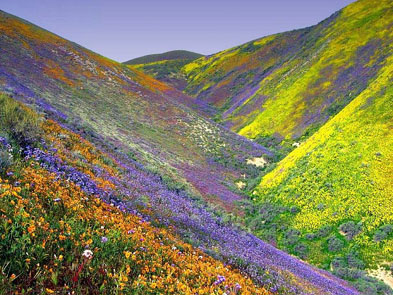
Birdsong, blossoms and sunbeams -- spring definitely has sprung in Israel. Fields of wildflowers --red anemones, wild mustard and blue field iris --bloom beyond Jerusalem's Peace Forest and scent the fresh breezes. Alas, there's not much love in the air yet. Smiles are scarce in a place where rancor and mistrust rule. Blood still is the overriding odor, at least subliminally.

Down in the dunes of Holon, south of Tel Aviv, the locals are reeling after a hot-headed guy was murdered over a parking spot dispute

"Today people murder each other over anything - a dog, a woman, so what's so surprising that this happened?," one mother told a reporter.
After a brief weekend lull, the violence has ramped up again. Not a big surprise. A Qassam rocket struck Ashkelon yesterday, shortly after the departure of the Prime Minister Ehud Olmert, and the IDF forces killed five Palestinian gunmen in the West Bank and arrested 30 more in Nablus.

Edginess is almost palpable. For days, local police in Jerusalem have refused to release the body of Abu Ala Dheim, the gunman killer who killed eight teens at Mercaz Harav Yeshiva and wounded 10 more. Authorities fear that if more than 5 family members attend his funeral, it may erupt into a media feeding frenzy or a literal bloodbath. They require burial by night with no martyr's fanfare. A fansite posted on Facebook has drawn condemnation for praising the horrific slaying as "an heroic act" across graphic photos of the dead students from the Zionist seminary.


According to television news reports,some yeshiva students have threatened to take revenge for the school shooting spree by attacking a senior Palestinian official at the al Aqsa Mosque, the volatile sacred site which Jews call the Temple Mount. An attack at this mosque could prompt a outbreak of violence across Israel and the Palestinian territories. Israeli police say they have prepared for the possibility of vengeance, but so far there have been no arrests. Demands for 100 new houses to be erected in settlements for each murdered student are frequently heard; expansion in the settlement was officially announced, much to the scorn of peacemaker Condi Rice.

So the next thing on the agenda is the arrival of America's Darth Vader... America's Vice President Dick Cheney is on the way to "prod for peace" in the Holy Land. Republican presidential candidate John McCain may show up as well, we are told, to further establish his security credentials while he woos Jewish voters.

Israelity bites

Monday, March 10, 2008

Shooting from the lip follows the Jerusalem slayings and teens' funerals


Hearing sirens wail in the Jerusalem night last Thursday, then radio broadcasts about a shooting spree inside a Yeshiva library, evoked fears that the intifada days of fear and loathing are here again.
Friends abruptly cancelled a visit to the big shuk (farmer's market), presuming we might provide a temptingly soft target inside a closed space on the funeral day for the 8 student victims. Eleven more wounded teens are recovering in hospital. It's been quiet and tense ever since and no one knows where we are in the latest cycle of violence (The IDF have slowed down incursions into Gaza, where 126 Palestinians were killed last week, one third of them civilians.) Bloody muddled east.

What's puzzling old-timers is that this attack by a lone Palestinian gunman with an AK-47 and a pair of pistols appeared to be modelled on American-style high school mass murderers, such as Columbine, and had scant resemblance to most suicide bombings. The gun-toting neighbors of the West Jerusalem seminary, who swiftly finished off the Arab killer, were an unusual added danger to investigators and reporters. Police at first speculated that these armed right-wingers might have gunned down some students by mistake after rumours circulated that a second or third shooter was on the loose, disguised as a student. Not all the bullets at the seen came from the gunman.

Gideon Levy, in a controversial and frank Haaretz column, talks about what Mercaz Harav Yeshiva represents. With its "fascist" ideology, it was not a random target of opportunity, he contends:

Nothing, of course, can justify the horrible killing of young boys in a library. Still, it would be appropriate to recall, even at this difficult hour, what this yeshiva has brought forth.Mercaz Harav is the flagship of the last group in Israeli society still operating in the realm of ideas.

Religious Zionists are the only group, aside from the ultra-Orthodox population, whose members are willing to lay down their lives for the collective and its worldview. It is a group that responds faithfully to its leaders - a group that even has leaders - and idolizes them. It is also a fairly homogenous group in terms of its thinking: Some 80 percent of its members define themselves as right-wingers. None of this is true of Israel's complacent, individualist secular public. And so we end up with a minority, 12 to 15 percent of the population, whose influence in certain areas is crucial and far exceeds its own relative size.

No one can explain in depth the magical powers of extortion this group has obtained. Nor can anyone ignore the damage it has caused the country. Without the settlement enterprise, peace might have reigned here already; without the Gush Emunim movement, supported by successive Israeli governments, there would be no settlements; and without the Mercaz Harav yeshiva, there would be no Gush Emunim. This institution, then, was the cradle of the settlement enterprise and its driving force. Most of the students killed in the terrorist attack were second-generation settlers. It should be said again, clearly and unequivocally: Their killing was a criminal act...
There are still very many secular Israelis who view the religious Zionists, the students of the Mercaz Harav yeshiva and the West Bank's so-called "hilltop youths" as a group of pioneers committed to noble values, as the pillar of fire advancing before the camp. Even those who deeply detest the Haredi public reserve a warm spot in their hearts for religious Zionism, the very group that has inflicted more calamity on us than all the Haredim put together.

The killing at the yeshiva is heartrending. No one deserved it. The innocents in Gaza and the victims at Mercaz Harav in Jerusalem were all an unnecessary sacrifice. They have already paid the highest possible price. Their families and those around them will probably adopt even more radical positions now, and so we will be led into another round of endless bloodshed.

Tuesday, March 04, 2008

What was Moses smokin'? Burning bush and divine sounds linked to psychedelics


Like many modern Israelis, Moses may have been stoned while he wandered in the Sinai way back when. At least one Israeli academic, who sampled strong hallucinogenic potions during his own South American fieldwork in the early 1990s, asserts that similar psychedelics derived from the desert acacia or the Bedouin stimulant rue may have fueled the patriarch's religious visions shared with his tribe in the wilderness.

Benny Shanon, a cognitive psychology professor at Hebrew U, has no explicit proof, but revived a venerable controversy in a recent scientific article, Ofri Ilani reports in Haaretz.


“And all the people perceived the thunderings, and the lightnings, and the voice of the horn, and the mountain smoking.” Thus the book of Exodus describes the impressive moment of the giving of the Torah on Mount Sinai.


The “perceiving of the voices” has been interpreted endlessly since these words were first written. When Professor Benny Shanon, professor of cognitive psychology at the Hebrew University of Jerusalem, reads the verse, he recalls a powerful hallucinatory experience he had when he visited the Amazon and drank a potion made from a plant called ayahuasca.

“One of the things that happens when you drink the potion is a visual experience created via sounds,” he says.Shanon presents a provocative theory in an article published this week in the philosophy journal Time and Mind. The religious ceremonies of the Israelites included the use of psychotropic materials that can found in the Negev and Sinai, he says.

“I have no direct proof of this interpretation,” and such proof cannot be expected, he says. However, “it seems logical that something was altered in people’s consciousness. There are other stories in the Bible that mention the use of plants: for example, the tree of the knowledge of good and evil in the Garden of Eden.”

Shanon, former head of the Hebrew University psychology department, said his first experience with ayahuasca was in 1991 when he was invited to a religious ceremony in the northern Amazon in 1991 in Brazil.

“I experienced visions that had spiritual-religious connotations,” he says.

Since that time, he has used it hundreds of times, and has published a book about the plant.

“Hypotheses have been around for 20 years connecting the beginning of religions with psychoactive materials,” Shanon says. He believes the Israelites used two plants in Sinai and the Negev: one of them is wild rue, a hallucinogen used by the Bedoin to this day. However this plant is not identified with any plant mentioned in the Bible.

The acacia tree also has psychedelic properties, Shanon says, which the Israelites could have used. The acacia is mentioned frequently in the Bible, and was the type of wood of which the Ark of the Covenant was made. According to Shanon, he drank a potion prepared from a species of acacia while he was in South America, which caused similar experiences to those produced by the ayahuasca.

Shanon also sees signs of a hallucinogenic vision in the story of the burning bush. “Moses ‘looked, and, behold, the bush burned with fire, and the bush was not consumed,’” Shanon quotes from Exodus 3:2. Time passes differently when under the influence of the plant, he notes. “That’s why Moses thought the bush was not consumed. It should have been burned in the time he thought had passed. And in that time, he heard God speaking to him.”

“But not everyone who uses a plant like this brings the Torah,” Shanon concedes. “For that, you have to be Moses.”

Sunday, March 02, 2008

Gaza- grief all around


Bloody Gaza. Once again, to quell rocket fire, the IDF has rolled into the Gaza strip and dominated its skies, and 101 Palestinians were killed in pitched battles, according to wire services and the IDF's tally. Two Israeli soldiers were buried yesterday after fatal shootings during the incursion, which was launched after a rocket struck dead an Israeli student in Sderot.
Leaders from the Palestinian authority and Israel both have labelled this weekend's violence war and muttered the H-word (holocaust with a lower-case H.)
The violence has been ramping up for many weeks, with Israel hinting about an invasion, and further bloodshed seemed inevitable once long-range Grad rockets struck the port of Ashkelon.
Seventeen were fired over the weekend, supplementing 40 qassams a day that rain havoc in Sderot.
The typical ratio of 100 Palestians to avenge the death of a couple Israelis seems to be holding.
As Condi Rice checks into the David Citadel again, Israeli tanks are pulling out of northern Gaza, and Abbas has pulled out of peace talks. No one is placing bets on how soon the bloodshed will resume or another IDF blitz will be ordered. Restraint or concessions do not seem to be in the offing by either side. The brutality of this relentless conflict suggests that present policy is not working. One colleague wonders whether opening up Sderot to Palestinian day-workers, which would make it counter-productive for militants to keep up the assault of qassams, would be a start. Something's gotta give.

Bloggers inside Gaza say:


"I had a long day, an awful day, taking photos and writing from on the ground in Gaza City and northern Gaza. I met with two children who survived Wednesday's Jabalya soccer bombing: the other four kids were, as you likely know, killed. One of the children I saw had no flesh on their legs, had burns all over their bodies." - Rafah Today – Daily Life in Palestine, Mohammed Omer in Rafah, Gaza

"We celebrated Yousuf's fourth birthday today. We ate cake. And we counted the bodies. We sang happy birthday. And my mother sobbed. We watched the fighter jets roar voraciously on our television screen, pounding street after street. Yousuf tore open his presents, and asked my mother to make a paper zanana, a drone, for him with origami; And we were torn open from the inside, engulfed by a feeling of impotence and helplessness; fear and anger and grief; despondence and confusion." - Raising Yousuf, Unplugged: diary of a Palestinian mother, Laila El-Haddad in Gaza City

"Walking to the Red Crescent Society (I do not have fuel in my car), I can hear successive explosions, from different parts of the city, and the drone in the sky. I can also clearly see the security forces soldiers, outside their headquarters, as it is under threat of bombing by the Israeli military forces. I had to walk very fast , expecting the worst. Arriving at work, I find we do not have enough fuel for the ambulance and other vehicles. No fuel has entered Gaza for 17 days , our store has been exhausted.Oh my God, this situation will have its disastrous impact on our health facilities." - From Gaza, With Love, Dr Mona El-Farra, Gaza City


Suffer little children. Pictured right, a direct hit on a Sderot apartment house, which took out the wall of a baby's nuresry last month. Says Israeli prime minister, Ehud Olmert:"Nobody in the world would deny that striking at Hamas strengthens the chance for peace." Huh?

Timeline of recent events:


November 27, '07 Bush hosts peace talks between Israeli leader Ehud Olmert and the Palestinian president Mahmoud Abbas at Annapolis. The conference is billed as a starting point for a negotiated peace agreement. Eventually, all sides would agree to a separate Palestinian state to exist, alongside Israel, and so end years of territorial conflict.

2008

January 25 Palestinians in the grip of an Israeli economic blockade spill over the Egyptian border to buy essential provisions.

February 4 An Israeli woman is killed by a suicide bomber in Dimona, in the first such attack by Palestinian militants in over a year. Israel blames Hamas's armed wing, and pounds Gaza with rockets, killing at least 10.

February 27 An Israeli helicopter fires missiles at vehicles carrying suspected Palestinian paramilitary. Five are killed.

February 29 Israeli border towns come under attack from Palestinian militants. Israel's deputy defence minister says his forces will have "no choice" but to invade Gaza if the attacks continue.

March 2 Palestinian leader Mahmoud Abbas suspends contact with Israel after their sustained assault on Gaza which left about 100 people dead.