latest regional reports

Loading...

Thursday, May 22, 2008

Bible bonfires inside Israel


Was there a whiff of brimstone and sulfur when Bibles went up in smoke last week? Certainly, it was not the finest hour for the people of the book...particularly when news of the incident coincided with an American soldier getting disciplined for using a Koran as target practice over in Iraq. Holey holy books create rancour, and the sight and odor of burning texts brings totalitarian stormtroopers and witch hunts to mind.

Messianic 'Jews for Jesus', who are closely linked with Evangelical Christian groups from America and now number up to 15,000 inside Israel, called for an official investigation after orthodox students from a yeshiva in the town of Or Yehuda allegedly dumped and burnt hundreds of copies of the New Testament. These had been distributed to Ethiopian immigrant families in the town.

At first, the action was defended by Deputy Mayor Uzi Aharon, of the Shas party, as "purging the evil among us", but he was quick to backtrack. Ultimately, he blamed "three or four" hotheaded students for a "spontaneous act" which led to an international public relations disaster. Aharon apologized by saying "sorry we hurt the feelings of others", but he shrugged off criticism of his anti-missionary zeal. To proselytize is against the law inside the Jewish State, although Christian missionaries often are tolerated when they spread the gospel to Israeli Arabs.

Tensions are on the rise. Two months ago, a parcel bomb left outside a house in Ariel wounded the son of a prominent Messianic Jew. Haredim massed outside messianic Jewish gatherings in Beersheba and Arad, and stirred up violence.


And just before Independence Day, a group of religious Zionist rabbis called for a boycott of this year's International Bible Quiz after discovering that one of the four finalists from Israel, Bat-El Levi, an 11th-grader from Jerusalem's Pisgat Ze'ev neighborhood, was a messianic Jew.

The rise in tensions is partly due...to increased fervor within haredi anti-missionary groups.

...Victor Kalisher, the son of Holocaust survivors, spoke to the Jerusalem Post about his shock and dismay at the burnings. "As Jews we were raised and taught that were books are burned, worse things can happen. That's what I think when I see the pictures of what happened in Or Yehuda. What worries me is that nobody has stood up against this. It seems there is a war against messianic Jews in Israel. Nobody cares about many, what I believe to be cults, in Israel. These cults, which are not based on the Bible, don't pose a threat to the establishment. But God forbid a Jew learns about the messiah from the [Christian] Bible," Kalisher said.

He said he did not know who paid for and distributed the New Testaments that were distributed in Or Yehuda, but that there was demand for the books from many quarters. "The Bibles are not forced on anybody and are not forced into any homes. The book has never harmed anyone, you can choose to read it or choose not to read it. If this happened to Jewish books overseas we would be screaming anti-Semitism. This sort of thing happens in some regimes around us that we don't like," he said.

Urgent Email from Ersatz Israel


Hmmm...could there perhaps be a Nigerian twist in this sleazy tale of Slim-Fast and fat envelopes?
According to Jameel, over at the clever Muqata blog, shortly before the Prime Minister's rapprochement with Syria was announced with full fanfare from Turkey, the email below had been making the rounds:

Urgent Email from Olmert
Got this by email a few minutes ago...

---------- Forwarded message ----------
From: Ehud Olmert
Date: Tue, May 20, 2008 at 5:20 PM
Subject: urgent
To: Jameel Rashid


From: PM Ehud Olmert

Greetings from Jerusalem

Before I introduce myself, I wish to inform you that this letter is not a hoax mail and I urge you to treat it serious. We want to transfer to overseas account (30,000.000 NIS) Thirty million New Israeli Shekels from a prime Bank here in Israel. I want to ask you, if you are not capable to quietly look for reliable and honest person who will be capable and fit to provide either an existing bank account or to set up a new Bank a/c immediately to receive this money, even an empty a/c can serve to receive this money, as long as you will remain honest to me till the end for this important business trusting in you and believing in God that you will never let me down either now or in future.

I am PM Ehud Olmert, presently the Prime Minister of Israel. Potentially in the course of an audit next week, it will be discovered that I have a floating fund in an account opened in the bank in 1990, in which I regularly deposited envelopes full of cash. I discovered that with the audit next week, if I do not get this money out urgently it will be forfeited for nothing.

The official owner of this account is my wife Aliza, a great artist and a resident of Jerusalem, who unfortunately never had any art skills, and it shows it what she produces.

While we would have claimed that the deposits were for artwork, no one believes that any more, as who would actually by her crap. No other person knows about this account or anything concerning it - yet.

The total amount involved is Thirty million New Israeli Shekels only [30,000.000.00 NIS] and we wish to transfer this money into safe foreigners account abroad. But while I know many foreigners who give me money, I don't know any foreigner who will keep their mouth shut; I am only contacting you as a foreigner because this money cannot be approved to a local person here, but to a foreigner who has information about the account, which I shall give to you upon your positive response. I am revealing this to you with believe in God that you will never let me down in this business, you are the first and the only person that I am contacting for this business, so please reply urgently so that I will inform you the next step to take urgently.

At the conclusion of this business, you will be given 40% of the total amount, 50% will be for us while 10% will be for the expenses both parties may incurred during this transaction. PLEASE, TREAT THIS PROPOSAL AS TOP SECRET.

I look forward to your earliest reply

Best Regards,

PM Ehud Olmert

Jerusalem, Israel

Wednesday, May 21, 2008

Region hotting up? Hopes meet reality

In the past few weeks, the noise from the Middle East region has intensified, reaching a crescendo with U.S. President George W. Bush’s visit and Osama Bin Laden's latest Jihadist harangue about targetting Israel. According to Strategic Forecast analyst George Friedman, whose viewpoint is excerpted below, there were four axes of activity:

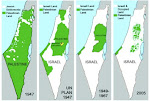
/click on map, left, to enlarge/

*Talk about a deal between Israel and the Palestinians;

*Talk about a deal between the Syrians and Israelis;

*Fighting in Lebanon between Hezbollah and its enemies; and

*Israeli Prime Minister Ehud Olmert under investigation for taking bribes.
Taken together, it would seem something is likely to happen. Whether it does remains to be seen.

Talk of an Israeli-Palestinian Deal

Let’s begin with the talk of a deal between the Israelis and Palestinians and with the fact that this description is a misnomer. The Palestinians are split geographically between the West Bank and the Gaza Strip and ideologically into two very distinct groups. The West Bank is controlled by the Palestinian National Authority (PNA), which as an institution is split between two factions, Fatah and Hamas. Fatah is stronger in the West Bank than in Gaza and controls the institutions of the PNA. It is almost fair to say that the PNA — the official Palestinian government — is in practice an instrument of Fatah and that therefore Fatah controls the West Bank while Hamas controls Gaza.

Ideologically, Fatah is a secular movement, originating in the left-wing Arabism of the 1960s and 1970s. Hamas is a religiously-driven organization originating from the Sunni religious movements of the late 1980s and 1990s. Apart from being Palestinian and supporting a Palestinian state, it has different and opposed views of what such a state should look like both internally and geographically. Fatah appears prepared to make geographical compromises with Israel to secure a state that follows its ideology. Its flexibility in part comes from its fear that Hamas could supplant it as the dominant force among the Palestinians. For its part, Hamas is not prepared to make a geographical compromise except on a temporary basis. It has made it clear that while it would accept a truce with Israel, it will not accept a permanent peace agreement nor recognize Israel’s right to exist.

Israel also is split on the question of a settlement with the Palestinians, but not as profoundly and institutionally as the Palestinians are divided. It is reasonable to say that the Israeli-Palestinian conflict has become a three-way war between Hamas, Fatah and Israel, with Fatah and Israel increasingly allied against Hamas. But that is what makes the possibility of a settlement between Israel and the Palestinians impossible to imagine. There can be a settlement with the PNA, and therefore with Fatah, but Fatah does not in any way speak for Hamas. Even if Palestinian President Mahmoud Abbas could generate support within Fatah for a comprehensive settlement, it would not constitute a settlement with the Palestinians, but rather only with the dominant faction of the Palestinians in the West Bank.

Given the foregoing, the Israelis have been signaling that they are prepared to move into Gaza in an attempt to crush Hamas’ leadership. Indeed, they have signaled that they expect to do so. We could dismiss this as psychological warfare, but Hamas expects Israel to move into Gaza and, in some ways, hopes Israel does so that it can draw the Israelis into counterinsurgency operations in an inhospitable environment. This would burnish Hamas’ credentials as the real anti-Israeli warriors, undercutting Fatah and the Shiite group Hezbollah in the process.

For Israel, there might be an advantage in reaching a settlement with Abbas and then launching an attack on Gaza. Abbas might himself want to see Israel crush Hamas, but it would put him and the PNA in a difficult position politically if they just stood by and watched. Second, the Israelis are under no illusions that an attack on Gaza would either be easy or even succeed in the mission of crushing Hamas’ military capability. The more rockets fired by Hamas against Israel, the more pressure there is in Israel for some sort of action. But here we have a case of swirling activity leading to paralysis. Optimistic talk of a settlement is just talk. There will be no settlement without war, and, in our opinion, war will undermine Fatah’s ability to reach a settlement — and a settlement with the PNA would solve little in any event.

(Note that an Egyptian official announced yesterday that Israel is prepared 'in principle' to accept a two-stage Gaza truce that would include lifting the siege in return for the release of corporal Gilad Shalit, held captive by Hamas for nearly two years.

Meanwhile, Israeli air strikes continue in the Gaza Strip. The photo-shopped image at left was supplied by disgruntled ex-soldiers from the IDF who despair of the toll of occupation and desire peace in their lives.)

Talk of a Syrian-Israeli Peace Agreement

There also is the ongoing discussion of a Syrian-Israeli peace agreement. Turkey is brokering these talks, driven by a desire to see a stable Syria along its border and to become a major power broker in the region. The Turks are slowly increasing their power and influence under the expectation that in due course, as the U.S. withdraws from Iraq, a power vacuum will exist that Turkey will have to — and want to — fill. Turkish involvement in Syria represents a first step in exercising diplomatic influence to Turkey’s south.

Syria has an interest in a settlement with Israel. The al Assad government is composed of an ethnic minority — the Alawites, a heterodox offshoot of Shiite Islam. It is a secular government with ideological roots much closer to Fatah than to Hamas (both religious and Sunni) or Hezbollah (Shiite but religious). It presides over a majority Sunni country, and it has brutally suppressed Sunni religiosity before. At a time when the Saudis, who do not like Syria, are flush with cash and moving with confidence, the al Assad regime has increased concerns about Sunni dissatisfaction. Moreover, its interests are not in Israel, but in Lebanon, where the region’s commercial wealth is concentrated.

Syria dabbles in all the muddy waters of the region. It has sent weapons to Sunni jihadists. Hamas’ exiled central leadership is in Damascus. It supports Hezbollah in Lebanon. Syria thus rides multiple and incompatible horses in an endless balancing act designed to preserve the al Assad government. The al Assads have been skillful politicians, but in the end, their efforts have been all tactics and no strategy. The Turks, who do not want to see chaos on their southern border, are urging the Syrians to a strategic decision, or more precisely to the status quo ante 2006.

The United States has never trusted the al Assads, but the situation became particularly venomous after the 2003 invasion of Iraq, when the Syrians, for complex political reasons, decided to allow Sunni fundamentalists to transit through Syria into Iraq. The Syrian motive was to inoculate itself against Sunni fundamentalism — which opposed Damascus — by making itself useful to the Sunni fundamentalists. The United States countered the Syrian move by generating pressure that forced the Syrian army out of Lebanon.

The Israelis and Syrians have had a working understanding on Lebanon ever since the Israeli withdrawal from Lebanon. Under this understanding, the Syrians would be the dominant force in Lebanon, extracting maximum economic advantage while creating a framework for stability. In return, Syria would restrain Hezbollah both from attacks on Israel and from attacks on Syrian allies in Lebanon — which include many groups opposed to Hezbollah.

The Syrian withdrawal was not greeted with joy in Israel. First, the Israelis liked the arrangement, as it secured their frontier with Lebanon. Second, the Israelis did not want anything to happen to the al Assad regime. Anything that would replace the al Assads would, in the Israeli mind, be much worse. Israel, along with the al Assads, did not want regime change in Damascus and did not want chaos in Lebanon, but did want Hezbollah to be controlled by someone other than Israel. And this was a point of tension between Israel and the United States, which was prepared to punish the al Assads for their interference in Iraq — even if the successor Syrian regime would be composed of the Sunni fundamentalists the Syrians had aided.

The Turkish argument is basically that the arrangement between Syria and Lebanon prior to 2006 was in the best interests of Israel and Syria, but that its weakness was that it was informal. Unlike the Israeli-Egyptian or Israeli-Jordanian agreements, which have been stable realities in the region, the Israeli-Syrian relationship was a wink and a nod that could not stand up under U.S. pressure. Turkey has therefore been working to restore the pre-2006 reality, this time formally.

Two entities clearly oppose this settlement. One is the United States. Another is Hezbollah.

The United States sees Syria as a destabilizing factor in the region, regardless of Syria’s history in Lebanon. In addition, as Saudi oil revenues rise and U.S. relations with Sunnis in Iraq improve, the Americans must listen very carefully to the Saudis. The Saudis view Syria — a view forged during the 1970s — as an enemy. The Saudis also consider the Alawite domination of Syrian Sunnis as unacceptable in the long run. Saudi Arabia is also extremely worried about the long-term power of Hezbollah (and Iran) and does not trust the Syrians to control the Shiite group. More precisely, the Saudis believe the Syrians will constrain Hezbollah against Israel, but not necessarily against Saudi and other Sunni interests. The United States is caught between Israeli interest in a formal deal and Saudi hostility. With its own sympathies running against Syria , the U.S. tendency is to want to gently sink the deal.

In this, U.S. interests ironically are aligned with Hezbollah and, to some extent, Iran. Hezbollah grew prosperous under Syrian domination, but it did not increase its political power. The Syrians kept the Shiite group in a box to be opened in the event of war. Hezbollah does not want to go into that box again. It is enjoying its freedom of action to pursue its own interests independent of Syria. It is in Hezbollah’s interests to break the deal. Lacking many allies, the Iranians need the Syrians, as different as the Syrians are ideologically. Iran is walking a tightrope between Syria and Hezbollah on this. But Tehran, too, would like to sink the talks.

Tuesday, May 20, 2008

Jerusalem City officials act quickly so public won't 'get carried away' by new film


Already, posters for S*x and the City, the movie have come under fire in conservative parts of Jerusalem...and that's not because too much flesh is on display; the problem seems to be the very word "sex." Suggestions are that the city fathers cut off the offending three letters.

The Jerusalem Post reported today that:

Forum Films, the Israeli distributor of the soon-to-be-released "Sex and the City" movie, won't be hanging advertising posters and billboards in Jerusalem and Petah Tikva because officials there don't want the word "sex" on display, said company spokesman Arye Barak.

Municipal officials there asked to have the word "sex" removed from the posters, Barak said. "We told them, the way you don't remove the word "Coca" from "Coca-Cola" and just leave "Cola," we can't do it in this case," he said. "It's ludicrous."

Advertisemnts for the movie, based on the popular TV series, were to go up elsewhere in Israel on Tuesday night, said an official at Maximedia, the Israeli company that is handling outdoor advertising for the movie.

Alternative outdoor ads will not be hung in Jerusalem and Petah Tikva, though the movie is heavily advertised on TV, the Internet and in newspapers, Barak said.

The worldwide release of the movie is scheduled for May 29.

This isn't the first time movie advertisers have come under pressure from the religious. When the animated Disney movie "Tarzan" was released in Israel, Tarzan's loincloth created an uproar among religious Jews who found it provocative, Barak said. The outdoor posters that were already hung were taken down so the cloth could be enlarged, he said.

Nor is this the first time that "Sex and the City" has run afoul of Israeli religious sensibilities. Several years ago, a poster and billboard campaign showing star Sarah Jessica Parker in a skimpy, sequined dress was quickly pulled and replaced with new ads of her in a dress that covered her arms, back and thigh.


Friday, May 16, 2008

Birthday ballyhoo and blues


Ain't it good to know that you've got a friend
When people can be so cold
They'll hurt you, and desert you
And take your soul if you let them
Oh, but don't you let them

You just call out my name
And you know wherever I am
I'll come running to see you again
Winter, spring, summer or fall
All you have to do is call
And I'll be there
You've got a friend


Such a schlocky theme song for the 60th birthday bash. Oy veh. George Bush and Ehud Olmert made lame duck squawks at one another in front of a gathering of world leaders,who were also subjected to what analyst Calev Ben-David of the Jerusalem Post described as "inappropriate homo-erotic interpretations of Carole King." (hmmmm...a bit harsh, Calev.)
Yesterday, after a sweaty day-trip to the ancient fortress Masada, one of the ultimate Zionist symbols, Bush addressed the Knesset about how peace is nigh in the 'hood, give or take another sixty years. "You have raised a modern society in the promised land," Bush told the legislators, minus the Arab MKS. "And you have built a mighty democracy that will endure forever and can always count on America to stand at its side."
Next the Bushes hosted their own grand reception at the Israel Museum. (Somehow Izzy Bee got snubbed and received no invitation. Sniff.) A fragment of one 2000 year old scroll at the museum reportedly was shown to Dubya, and on it was penned a famous line from the Prophet Isaiah: “They shall beat their swords into plowshares.” Not that Israelis desire any American plowshares, mind you. On their birthday wish list, under perceived threat from a soon-to-be-nuclear Iran, Israelis definitely want more weapons.
Focusing on that verse is no more ironic than, say, when the New York Slim-Fast tycoon, S. Daniel Abraham, was hauled in yesterday by Jerusalem police for questioning about donations to the fat-cat politician, Olmert. Abraham denied any wrong-doing and insisted Olmert is "one of the best prime ministers we have ever head." Right. Just about as credible as Whoopi Goldberg's endorsement of his Creamy Milk Chocolate shake. So many centuries out of Egypt, but still in denial (d' Nile), as Ms Goldberg might say. But I digress.

Israel's official birthday festivities have continued for three days, with bloated presidential convoys of 30 cars clogging the narrow streets and a spy drone similar to the one from Erez crossing tethered in the sky above the King David Hotel like an albino guppy gone astray. It took five transport planes from the states to bring in Bush's miscellaneous paraphernalia to one of the most security-conscious countries on the planet.
To many Jerusalemites, there is something off-putting and unsettling about gorgeous fireworks booming overhead on the very same day an Iranian-made Grad rocket struck a shopping mall in Ashkelon, maiming 15 shoppers, and five Gazans were killed by IDF actions. Save the pretty booms til the conflict is done. These triumphalist ceremonies may come back to bite us. It is insensitive: they coincide with what the Palestinians call their "Naqba", or catastrophe. SOme 700,000 men, women and children were uprooted from their homes during partition - some fled, some were expelled. So Arabs released 21,915 (to represent 365 days x 60 years) black balloons over the skies of Jerusalem; my Orthodox Jewish neighbor joked that this symbolizes that their grievances are just so much hot air. Amongst them, we spotted a trio of storks gliding on the upcurrents. These big birds might even have been displaced by the presidential helicopter sortie to Masada, where hundreds flock. They appeared mightily confused, and just going in circles. What's the symbolism there, folks?

Bradley Burston, a commentator on Haaretz, acknowledged the Palestinian take on the six decade milestone in a characteristically contrarian style:
It was, all in all, a day to consider what we owe the Palestinians.

Before all else, we owe the Palestinians our respect. They could have rolled over long ago, packed up and headed for Australia, given up. They know that their leaders are execrable, their institutions corrupt and impotent, their ideology self-destructive, their economy in ruin, their international prestige at a nadir.

Still, they are here. Still, they are our occupiers. After 60 years, powerless, in disarray, they occupy our imagination and our politics and our nightmares.

We owe the Palestinians for keeping us honest. We owe the Palestinians for reminding us that we were never alone in this place. We owe the Palestinians what we expect from them: the recognition that they deserve, as a real people.

We owe the Palestinians a state.
Israelity bites.

addendum:
Check out the special report by the Economist's brilliant Jerusalem correspondent, Gideon Lichfield. One of the finest summations of Israel at 60, it is available here.
The prolific Lichfield also blogs away sporadically at fugitive peace.

Tuesday, May 13, 2008

Does Olmert Make You Gag?

The timing couldn't have been worse. Bigwigs are jetting in for Israel's 60th birthday bash, yet Prime Minister Ehud Olmert's dodgy propensity for bribes and favors takes the proud sheen off of the festivities. It's not the first time the top combover has sullied the Promised Land with his distasteful sleaze factor, and he may well wriggle free of any penalties. Definitely, he makes Israeli journalists gag. Or tried to with a domestic gag order. The veteran journalist Alan Abbey explains:


Gag Orders, Global Media and the Internet


When an Israeli court said Israeli media couldn't cover an investigation of Ehud Olmert, the NY Post broke the ice.
In Israel, police are investigating Prime Minister Ehud Olmert for allegedly accepting bribes or illegal campaign contributions in the late 1990s from an American businessman. The police requested -- and an Israeli court granted -- a gag order on media coverage of this investigation. But that gag order is the latest victim of the Internet and global media.
Ostensibly, this gag order was intended to enable Israeli police to continue their investigation unimpeded. The Israeli media are notorious for reporting every scrap of information, rumor and innuendo. In this case, the gag order did not stop leaks and speculation about the case, including what may or may not have been learned, the potential political impact -- even though details were missing and few hard facts were available.

The Israeli court gag order left the media here winking, nodding, and nudging their audiences by saying, "We know what is going on, but you don't." But even that didn't last. On May 6 the New York Post broke the story of the name of the alleged "bag man" for Olmert cash payments. They followed it up on May 7 with a few new details. Also on May 7 the New York Times weighed in with a better story.

By May 8, the pressure on the Israeli cops and courts from domestic media was too much, and the gag order was partially lifted. What kind of pressure? Well, the Israeli was media saying things like, "We can't tell you what's going on, but go to the New York Post."

The gag order was officially lifted May 8 at 11 p.m. Israeli time. Minutes later the media went public with stories that had been sitting in the can for two days, and Olmert made a statement on TV addressing the matter and declaring his innocence.


Since then, the mystery donor Morris Talansky has claimed the money he gave to Olmert wasn't a bribe and pooh-poohed reports that he was scared Olmert might harm him.

In an interview in English with Israel's Channel 10 news, Talansky referred to Olmert as the o"prince of the Likud" and ridiculed speculations that he was part of a right-wing conspiracy to sabotage Olmert and his peace talks with the Palestinians.
Quite a sideshow for Rupert Murdoch, Jon Voight, George W. Bush and the bunch who are here to celebrate six decades of the Jewish democracy. Israelity bites.

Monday, May 12, 2008

Sabra selling techniques

This vintage SNL clip of Tom Hanks is circulating among Middle East analysts this week, to mark the celebration of Israel's 60th birthday. It mocks the stereotypically brash Sabra vendors in New York with a 'Price is Right' sketch: contestants are forced to buy products they don't want because they can not resist the high pressure come-on, and haggling commences.
This heavy-handed bizarre bazaar manner does persist in some Israeli shuks, and even is remarked upon in the article (below) by a cabby who is put off by the loudmouthed antics of Israeli immigrants inside the US.
But on Izzy Bee's last visit to the states, only gentle Sabras were encountered, and always inside suburban malls, inevitably hawking cut rate Dead Sea salts and mud-packs with a smile. No bargaining. How times change.