Saturday, May 30, 2009

Mark Twain to Barack Obama, on the perils and pleasures of the Holy Land


Barack Obama, the US president, has been given books by Hugo Chavez of Venezuela, among others, and the latest was a present from Israel's prime minister Bibi Netanyahu. I was intrigued by the choice of title. Obama was presented an excerpt from "Innocents Abroad, by Mark Twain, in special bookbinding for the White House Library.

What can be read into all this?

Mark Twain had toured a "backwater of the Ottoman Empire whose inhabitants had no sense of a separate national identity. Though Palestinian nationalism and resistance is a reality that Israel must contend with today, it originated and gained traction as a reaction to the return of large numbers of Jews to Israel.

Twain's classic “Innocents Abroad” is so popular with Zionists that the chapters from his travelogue on the Middle East have been translated into Hebrew and published as a separate book, entitled Pleasure Excursion to the Holy Land.

Click here to see the complete Text:

///////
So here's what Mark Twain had to say about Israel


It is a hopeless, dreary, heart-broken land.

Small shreds and patches of it must be very beautiful in the full flush of spring, however, and all the more beautiful by contrast with the far-reaching desolation that surrounds them on every side. I would like much to see the fringes of the Jordan in spring-time, and Shechem, Esdraelon, Ajalon and the borders of Galilee -- but even then these spots would seem mere toy gardens set at wide intervals in the waste of a limitless desolation...Perched on its eternal hills, white and domed and solid, massed together and hooped with high gray walls, the venerable city gleamed in the sun. So small! Why, it was no larger than an American village of four thousand inhabitants, and no larger than an ordinary Syrian city of thirty thousand. Jerusalem numbers only fourteen thousand people

We dismounted and looked, without speaking a dozen sentences, across the wide intervening valley for an hour or more; and noted those prominent features of the city that pictures make familiar to all men from their school days till their death. We could recognize the Tower of Hippicus, the Mosque of Omar, the Damascus Gate, the Mount of Olives, the Valley of Jehoshaphat, the Tower of David, and the Garden of Gethsemane and dating from these landmarks could tell very nearly the localities of many others we were not able to distinguish.

I record it here as a notable but not discreditable fact that not even our pilgrims wept. I think there was no individual in the party whose brain was not teeming with thoughts and images and memories invoked by the grand history of the venerable city that lay before us, but still among them all was no "voice of them that wept."

There was no call for tears. Tears would have been out of place. The thoughts Jerusalem suggests are full of poetry, sublimity, and more than all, dignity. Such thoughts do not find their appropriate expression in the emotions of the nursery.

Just after noon we entered these narrow, crooked streets, by the ancient and the famed Damascus Gate, and now for several hours I have been trying to comprehend that I am actually in the illustrious old city where Solomon dwelt, where Abraham held converse with the Deity, and where walls still stand that witnessed the spectacle of the crucifixion.


....I need not speak of the wonderful beauty and the exquisite grace and symmetry that have made this Mosque so celebrated -- because I did not see them. One can not see such things at an instant glance -- one frequently only finds out how really beautiful a really beautiful woman is after considerable acquaintance with her; and the rule applies to Niagara Falls, to majestic mountains and to mosques -- especially to mosques.

The great feature of the Mosque of Omar is the prodigious rock in the centre of its rotunda. It was upon this rock that Abraham came so near offering up his son Isaac -- this, at least, is authentic it is very much more to be relied on than most of the traditions, at any rate. On this rock, also, the angel stood and threatened Jerusalem, and David persuaded him to spare the city. Mahomet was well acquainted with this stone. From it he ascended to heaven. The stone tried to follow him, and if the angel Gabriel had not happened by the merest good luck to be there to seize it, it would have done it. Very few people have a grip like Gabriel -- the prints of his monstrous fingers, two inches deep, are to be seen in that rock to-day.

This rock, large as it is, is suspended in the air. It does not touch any thing at all. The guide said so. This is very wonderful. In the place on it where Mahomet stood, he left his foot prints in the solid stone. I should judge that he wore about eighteens. But what I was going to say, when I spoke of the rock being suspended, was, that in the floor of the cavern under it they showed us a slab which they said covered a hole which was a thing of extraordinary interest to all Mohammedans, because that hole leads down to perdition, and every soul that is transferred from thence to Heaven must pass up through this orifice. Mahomet stands there and lifts them out by the hair. All Mohammedans shave their heads, but they are careful to leave a lock of hair for the Prophet to take hold of. Our guide observed that a good Mohammedan would consider himself doomed to stay with the damned forever if he were to lose his scalp lock and die before it grew again.

We ascended the Hill of Evil Counsel, where Judas received his thirty pieces of silver, and we also lingered a moment under the tree a venerable tradition says he hanged himself on.

We descended to the canon again, and then the guide began to give name and history to every bank and boulder we came to: "This was the Field of Blood; these cuttings in the rocks were shrines and temples of Moloch; here they sacrificed children; yonder is the Zion Gate; the Tyropean Valley, the Hill of Ophel; here is the junction of the Valley of Jehoshaphat -- on your right is the Well of Job." We turned up Jehoshaphat. The recital went on. "This is the Mount of Olives; this is the Hill of Offense; the nest of huts is the Village of Siloam; here, yonder, every where, is the King's Garden; under this great tree Zacharias, the high priest, was murdered; yonder is Mount Moriah and the Temple wall; the tomb of Absalom; the tomb of St. James; the tomb of Zacharias; beyond, are the Garden of Gethsemane and the tomb of the mary; here is the Pool of Siloam, and -- "

We said we would dismount, and quench our thirst, and rest. We were burning up with the heat. We were failing under the accumulated fatigue of days and days of ceaseless marching. All were willing."
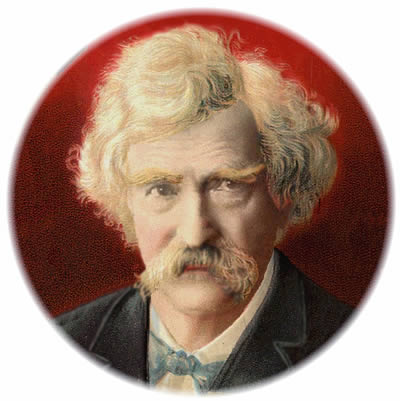
So that's what's on Barack's reading table.

Friday, May 29, 2009

Arab Lonely Hearts

Israel’s Ministry of Foreign Affairs—for some lovesick Arabs, the name brings to mind affairs of the heart. And their hearts have room for an Israeli mail order bride along the lines of Tzipi Llivni or Bar Rafeli. Most don’t seem too picky. Ace reporter Irris Makkler investigates this phenomenon for the Canadian Broadcasting corporation:

The Israeli Foreign Ministry in Jerusalem has been receiving a steady stream of the most unexpected requests – letters, email and phone calls from men across the Arab world seeking introductions to Israeli women. The Muslim men say they want to meet Jewish women, and they want to marry them!
It’s true the women won’t always be the first wives, but the men hope that the generous payments they are offering in camels will make up for that.

And it’s true that their countries don’t have diplomatic relations – but for these unusual lonely heart, none of that seems to matter

BuJus: the Lotus and the Matza


At a pleasant gathering of left wing BuJus, (Jewish followers of Buddhism) in Jerusalem, Izzy Bee learned why the Promised Land increasingly attracts Buddhist thinkers, even though it is such a bastion of monotheism. Jews, Christians, Muslims do pilgrimages to the old stones.. But what does Jerusalem hold for Buddhists?
"There's no place like Israel," said one Tibetan nun. "Nowhere else can you find three things in such abundance: Ignorance, Hatred, and Attachment."
The BuJu crowd nodded earnestly, but then discussed the political implications of living in a political state of Ignorance, or whether the state we all share might be Suffering. Three Jews, five opinions-minimum. The Buddhist perspective that it's all illusion was conveniently lain aside.
Later, while we all wolfed down cheesecake, there was general bonhomie. Before the evening licked off, I couldn't tell one lapsed Baptist the answer to "What the BeJeesus are BuJus?" Now I know: Blissed out Olim and Sabras, it appears.

Say Om. Not um.

Wednesday, May 27, 2009

Literary festival opens rough in Jerusalem

In case the pen really is mightier than the sword, Israeli officialdom isn't taking any chances. Dozens of machine gun-toting soldiers tried to shut down the gala opening of PalFest'09, a traveling international literary festival, and shooed the literati and diplomats out of the Palestinian National Theatre in East Jerusalem.

The organizers, who include the British Council and the U.N., quickly attempted to regroup at a French Cultural Centre nearby, but the evening lost its focus.
Though Michael Palin, of Monty Python fame, was one of the 20 featured writers of PalFest'09, he had nothing to do with scripting the ensuing chaos. The government of Israel, which bans Palestinians from holding official events inside "United Jerusalem" rather then in their de facto capital, Ramallah, had erroneously assumed that this festival, now in its second year, was sponsored by the Palestinian Authority. And that was that.

The latest interpretation of the law, which recently had shuttered a press center in East Jerusalem run by Arab Christians during Pope Benedict XVI's pilgrimage, apparently does not tolerate any assertion of Palestinian cultural life in East Jerusalem. This makes the notion of "Al-Quds, Capital of Culture 2009" a non-starter.

Last spring was marked by two rival literary festivals, when the Israeli government flew in Nobel laureate Nadine Gordimer and a handful of other distinguished foreign authors to address audiences in West Jerusalem. They were joined by local writers, as well. Because Palestinian audiences often encounter unpredictable hurdles on the road, the authors, poets and filmmakers who participated in the smaller festival had to be willing to cross checkpoints and travel around the West Bank to hold their series of lectures and workshops. Many later wrote up their experiences and this seems to have "politicized" the event in the minds of the Israeli authorities.

This year's authors are just as game and are pressing ahead with the schedule in Ramallah, Bethlehem, Jenin, and Hebron. Advertising is very low-key, and there has been virtually no coverage of this second annual Palestinian literary festival in the Israeli press, despite the kerfuffle on opening night.

Izzy Bee wonders whether to attend the final event in East Jerusalem, which is set for Thursday evening. It could prove to be rather Orwellian. Or Kafkaesque. Israelity bites.

Monday, May 25, 2009

A Marriage Manual for Jewish grooms

Our friend Anat Hoffman, the indefatigible rights campaigner, brings to our attention the instruction booklet for grooms-to-be from the Jerusalem Religious Council's compulsory marriage class.

The "how-to" manual says that
a "woman is like clay. The husband can shape and mold her as he pleases." It also says the wise husband will avoid his in-laws because "mothers-in-law tend to meddle."

The booklet encourages the liberal application of compliments, presents and flowers to wives.
"Don't let a day go by without complimenting your wife at least five times…say it even if it's a lie. A woman who hasn't been complimented is like a fish out of the water.

But, it warns, a husband must not become "spineless."
If a wife is "disrespectful you must not give in," it says. "You can get angry and stop talking to her until she realizes she was wrong."

UN probe in "Hariri whodunnit" points to Hezbollah, German media say


Despite all the recent alarm bells about the threat posed by the nuclear aspirations of Iran, it's Israel's northern border with Lebanon which is really hotting up right now. Not only did a nest of Israeli spies get exposed in Lebanon over the last couple of weeks, but one leader accused the Israeli intelligence services of plotting a targetted killing of Hassan Nasrallah to ignite a regional war and shuffle the deck.
Meanwhile, in the lead up to Lebanese elections in early June, the German newsweekly Der Spiegel has just published a sobering investigation. They conclude that Hezbollah, not the Syrians, assassinated the Lebanese former premier Rafik al-Hariri and suggest that the United Nations special tribunal probing the murder is purposely keeping its conclusions under wraps.
This German expose threatens to pull the rug out from under Hezbollah in upcoming elections, some analysts say. No wonder the Israel armed forces are planning nationwide war games next week, practicing how to face up to a multi-front attack on eretz Israel.

Read the full two-part account, by Erich Follath, online in English here. A sample excerpt below:

It was an act of virtually Shakespearean dimensions, a family tragedy involving murder and suicide, contrived and real tears -- and a good deal of big-time politics.
accusing German police commissioner Gerhard Lehmann, Mehlis's assistant in the Beirut investigations, of blackmail...

Sayyid claims that Lehmann, a member of Germany's Federal Criminal Police Office (BKA) proposed a deal with the Syrian president to the Lebanese man. Under the alleged arrangement, Assad would identify the person responsible for the Hariri killing and convince him to commit suicide, and then the case would be closed. According to Sayyid, the authorities in Beirut made "unethical proposals, as well as threats," and he claims that he has recordings of the incriminating conversations.
Mehlis denies all accusations.

Sunday, May 24, 2009

Mad Max, Marathon Man, barred from Gaza


As a desert marathoner, Max Calderan is definitely a hot shot. On the heels of Pope B-16's personal pilgrimage to the Holy Land, this Italian's 540 km run from Ramallah to Mt Sinai has captivated some of the European media. Max's promos hail him for his willingness to run for love, not money, but apparently the athlete was thwarted by skirmishes along the border fence in Gaza, during which two Palestinian militants were killed. The IAF has also been bombing smugglers' tunnels, and three dazed Palestinians were just dug out and arrested after being buried alive.
UNRWA, the United Nations sponsor of his run, lashed out at the Israeli security constraints on Calderan which forced him to reroute (now he's going by car partway, rather than run alongside the fence that surrounds the Gaza Strip.) The UN just released this assessment:

Marathon runners appear to have become the latest item on the list of things banned from the Gaza Strip. Max Calderan, an Italian national and winner of four international marathons, had hoped to run through Gaza as part of his 540 kilometer “Run For Love” from Ramallah, to Jerusalem, through Gaza, into Egypt and then to the pinnacle of Mount Sinai. Having been told by the Israeli authorities initially that he could go into Gaza as part of this five day mega-marathon and having been given assurances from the Israeli Ministry of Sport, he was still barred.

“I am very disappointed because there is no politics, no religion, nothing controversial in my Run For Love”, Max told a news conference in Jerusalem. “I run simply in the name of peace”. When asked whether he was a security risk because of potential problems in Gaza, Max said his “security was guaranteed by the United Nations and that this was just an excuse by the Israeli authorities to keep him out of Gaza”.

The event was co-sponsored in Gaza by the United Nations Relief and Works Agency. UNRWA Spokesperson, Christopher Gunness said: “It seems that marathon runners have now joined that list of banned items. Light bulbs, detergent, building materials and now marathon men. To make matters worse”, said Gunness, “we had young athletes, disabled children waiting to run with Max inside Gaza. They have been deprived of some sportive fun. Parents everywhere will surely find this a bewildering decision.”

Max Calderan will now travel from Jerusalem to Egypt by car where he will resume his run, a further 250 kilometers to the top of Mount Sinai.